Hells Canyon / Snake River
Part of Memory of a Larger MindOregon Origins Project · 2024–2025
About the Project
The deepest river gorge in North America holds multiple overlapping histories of violence. In 1877, the Nez Perce were forcibly removed from the Wallowa Valley — ten years before thirty-four Chinese gold miners were ambushed, murdered, and thrown into the Snake River at what is now Chinese Massacre Cove, the worst massacre of Chinese people by whites in the United States. No one was held accountable. Three dams, completed between 1960 and 1967, blocked salmon migration permanently. Snake River salmon are now approaching functional extinction.
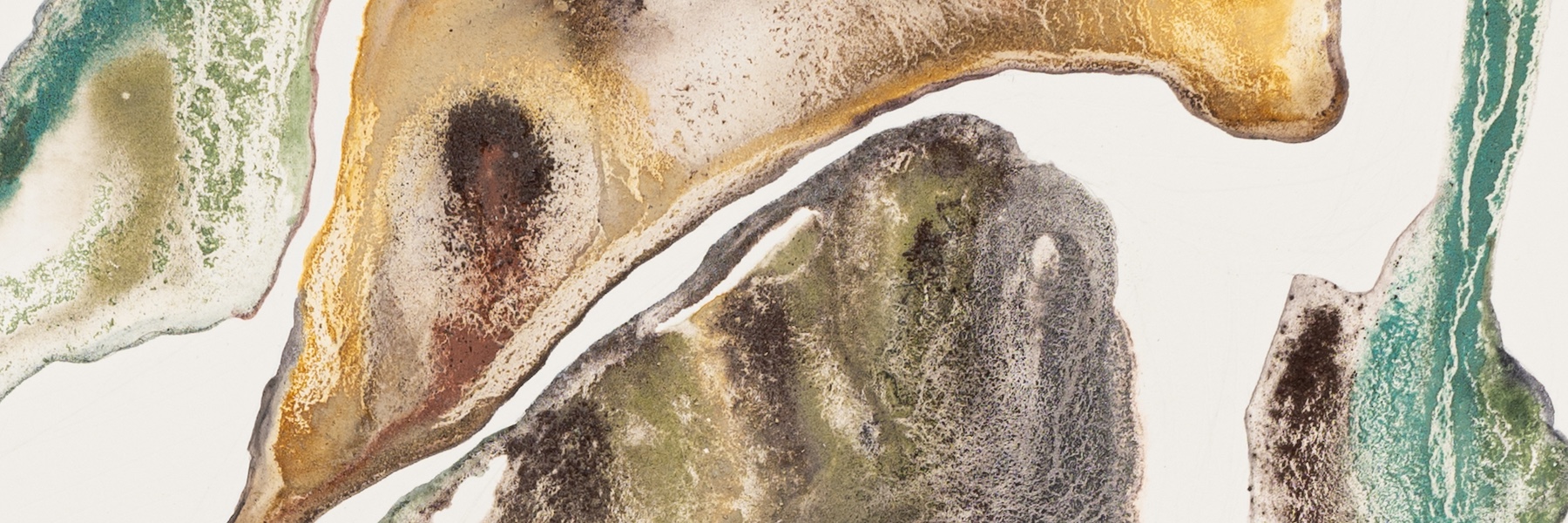
These pigments and paintings are made of Hells Canyon — its wildflowers, weeds, rocks, bones, and water from the Snake River, foraged in July 2024. Through their colors, textures, and tendencies of movement, they communicate memories that are part of the memory of the earth itself — including the epic story of Hells Canyon's creation: exotic terranes slowly carried across the ocean and, one after another over millions of years, slammed into the edge of the continent, creating the folded alternating mountain ranges and chasms of the region. Hells Canyon is the easternmost chasm.
This work began as part of the Oregon Origins Project with an inquiry into the dramatic geological history of this place. The work continued after the culmination of that collaboration, becoming a larger inquiry into the site's overlapping histories of Indigenous dispossession, racial violence, and ecological collapse. More works are forthcoming.
Selected Exhibitions
"Oregon Origins Project VI: The Birth of Cascadia," Stelo Gallery, Patricia Reser Center for the Arts, Portland, OR (2025)
Materials in all works
Hells Canyon wildflowers, weeds, and rocks · Snake River water · limestone · mule deer bone · egg (selected works)